

Where this post comes from: This article is based on our own reading of the full 80-page IRDAI consultation paper, “Recalibrating Economics of Insurance Distribution” (released September 2026), plus news reports on the market reaction to it. We have read the paper directly rather than relying only on summaries.
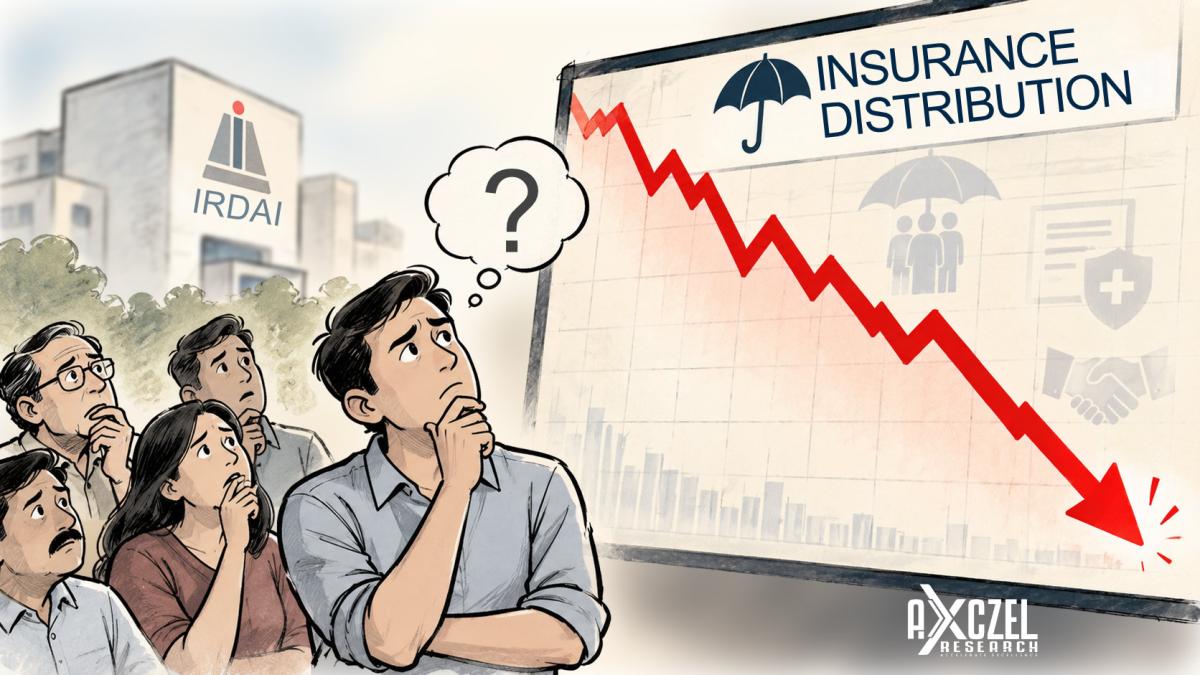
On September 24, 2026, the Insurance Regulatory and Development Authority of India (IRDAI) — the government body that regulates insurance companies in India — released the IRDAI consultation paper, proposing a major overhaul of how insurance is sold in the country. Within hours, shares of PB Fintech (which owns Policybazaar) and Turtlemint, two of India’s largest online insurance distribution platforms, fell sharply, seeing a significant crash.
That reaction alone tells you this isn’t a routine regulatory update. Here’s what the IRDAI consultation paper actually says, and what it could mean for anyone who buys — or plans to buy — a life, health, or motor insurance policy in India.
First, what is a “consultation paper”?
It’s important to be clear about this upfront: nothing has changed yet. A consultation paper is IRDAI’s way of floating proposed rules in public and inviting feedback from insurers, distributors, and citizens before deciding what to actually implement. IRDAI has kept the feedback window open until October 25, 2026. The final rules — if and when they come — could look somewhat different from what’s proposed here.
The problem IRDAI says it’s trying to fix
Every time you buy an insurance policy, a part of your premium doesn’t go toward your cover — it goes to the agent, bank, broker, or app that sold you the policy, as a commission. The IRDAI consultation paper argues this system has quietly become expensive and skewed against ordinary buyers, with distributors being paid more to sell a policy than insurers are rewarded for keeping customers happy after the sale.
That, the paper says, has produced a “buyer beware” market — one where sales pitches are shaped more by which product pays the seller the most, rather than which product actually suits you best.
The paper itself also cites two outside assessments that flagged similar concerns — the Reserve Bank of India’s Financial Stability Report (December 2025) and the government’s Economic Survey 2025-26 — as having pointed to high distribution costs as something holding back insurance coverage in the country. (We’re relying on IRDAI’s own citation of these two reports here, rather than having independently reviewed the reports ourselves.) This sits alongside the broader mandate set by Parliament’s Sabka Bima Sabki Raksha Act, 2025, which asks the regulator to improve policyholder protection and industry transparency.
What the IRDAI consultation paper proposes
The IRDAI consultation paper is dense, but the reforms boil down to a few themes:
1. Actual limits on commissions, not just guidelines
Since 2023, insurers have had flexibility to decide their own commission structures within an overall expense cap, and that flexibility, IRDAI says, didn’t work as intended — expenses simply climbed back to where they were a decade ago. So the paper proposes hard, product-wise commission ceilings, with mandatory products like third-party motor insurance getting the lowest limits, and low-effort renewals priced lower than a fresh first-time sale.
The regulator also wants overall company-level expense limits (called “Expenses of Management”) to come down gradually over the next few years, from levels that are meaningfully higher today.
2. Simplifying who can sell insurance
Today there are 8 different types of entities and 9 categories of individual sellers allowed to distribute insurance, each with different rules. The paper proposes collapsing this into just three clean categories, with the same rules applying to anyone doing the same kind of work. It also wants to make it easier for new, smaller players to enter, while letting existing distributors also sell other financial products so they aren’t solely dependent on pushing insurance.
3. A crackdown on mis-selling
This is probably the section most directly relevant to an ordinary buyer:
• Mandatory needs assessment: before selling a high-value life insurance policy, the agent or bank must document why that specific product suits you — not just get your signature.
• No more sales junkets: foreign trips, luxury gifts, and volume-linked bonuses for bank and NBFC staff selling insurance would be banned outright.
• Every policy gets tagged to the person who sold it, through a new “Public Insurance Registry.” A seller’s mis-selling track record becomes visible, and insurers can claw back commissions in proven mis-selling cases.
• The paper specifically calls out tactics like presenting a regular-premium insurance plan as if it were a fixed deposit, or persuading someone to surrender an existing policy on a false promise of better returns.
4. No more hiding the price
IRDAI wants to ban “dark patterns” — website or app designs that force you to hand over your phone number or email just to see a policy’s price or exclusions. Every insurer would have to publish a simple, standardised one-page summary of each product in plain language.
5. A neutral place to shop, and a public track record to check
The paper backs the development of Bima Sugam, a not-for-profit digital marketplace where you’d be able to directly compare and buy policies from different insurers. Paired with this is “Know Your Insurer” and “Know Your Distributor” — public records of claim settlement track records and distributor conduct, so you can check before you buy.
6. Fixes specific to motor and health insurance
Garages and car dealers would no longer be allowed to refuse cashless repair simply because you bought your motor policy elsewhere. The paper also proposes OTP- and Aadhaar-based identity verification before a policy is issued, to cut down on fraud.
What the IRDAI consultation paper could mean for you, if it goes through
• Potentially cheaper premiums — if insurers pass on savings from lower distribution costs.
• A better chance of being sold something that actually fits your needs, thanks to mandatory suitability checks.
• More transparency before you buy — seeing prices without giving up your phone number, and checking a seller’s track record first.
• Fewer nasty surprises at claim time, given the cashless-repair protections and identity verification.
None of this is guaranteed yet — it depends on what survives the consultation process.
Why some insurance-related stocks reacted sharply
PB Fintech (Policybazaar) is one of the listed companies whose stock fell sharply on September 24, the day the IRDAI consultation paper came out. A part of PB Fintech’s business involves insurance distribution, and the likely reason investors reacted the way they did is that this proposal could have some bearing on its revenue model — though we haven’t studied the company’s business in enough depth to say how, or by how much, and this shouldn’t be read as any comment on the stock itself.
Our take on the IRDAI consultation paper: a proposal, not a done deal
It’s worth repeating: this is a consultation paper, not a notified regulation. IRDAI is inviting feedback until October 25, 2026, and pushback from insurers and distributors on the sharper cuts seems likely.
So is this really the start of a structural downtrend for India’s insurance distribution industry? We honestly don’t know yet. The direction of travel — lower commissions, more transparency, stronger consumer protection — looks fairly clear from the paper itself. But how much of this survives in its current form, and how fast, remains to be seen. For now, it’s a “watch this space” story rather than a settled outcome.
This article is for general information only and is not investment or insurance advice. Figures and proposals are based on the IRDAI consultation paper as it stood in September 2026 and may change before any final regulation is notified. Any errors in summarizing are the author’s own.
Key takeaways
- What it is: On 24 September 2026, IRDAI released a public consultation paper, “Recalibrating Economics of Insurance Distribution”, proposing a major overhaul of how insurance is sold in India. It is a proposal, not a notified regulation, and feedback is open until 25 October 2026.
- What it proposes: Hard, product-wise commission ceilings; collapsing the 8 types of entities and 9 categories of individual sellers into three categories; and a crackdown on mis-selling, including a mandatory needs assessment for high-value life policies and a ban on sales junkets.
- What it could mean for buyers: If it goes through, potentially cheaper premiums if insurers pass on savings, more transparency before buying, and fewer surprises at claim time. The article stresses that none of this is guaranteed yet.
Frequently asked questions
A consultation paper is IRDAI’s way of floating proposed rules in public and inviting feedback from insurers, distributors and citizens before deciding what to implement. Nothing has changed yet, and the final rules could look somewhat different from what is proposed. IRDAI has kept the feedback window open until 25 October 2026.
The paper argues that commissions paid to the agent, bank, broker or app that sells a policy have made the system expensive and skewed against ordinary buyers, with sales pitches shaped by which product pays the seller the most. Since 2023, insurers have been free to set their own commission structures within an overall expense cap, and IRDAI says expenses simply climbed back to where they were a decade ago.
The article groups the reforms into six themes: hard commission limits by product; three clean categories of insurance sellers instead of many; a crackdown on mis-selling, with needs assessments and a Public Insurance Registry that tags each policy to its seller; a ban on dark patterns and a one-page plain-language summary of each product; support for the Bima Sugam marketplace and public Know Your Insurer and Know Your Distributor records; and fixes for motor and health insurance, such as cashless repair and OTP- and Aadhaar-based identity verification.
If the proposals go through, the article lists potentially cheaper premiums if insurers pass on savings from lower distribution costs, a better chance of being sold a product that fits your needs, more transparency before you buy, and fewer surprises at claim time. None of this is guaranteed yet, because it depends on what survives the consultation process.
Sources
Main sources:
IRDAI, “Recalibrating Economics of Insurance Distribution” — Public Consultation Paper, Part 1: Distribution Reforms, September 2026 (read in full for this article) — irdai.gov.in
Moneycontrol, “PB Fintech, Turtlemint stocks crash 20% after IRDAI’s consultation paper on insurance distribution” — moneycontrol.com
Other sources (cited within the IRDAI paper; not independently reviewed by us):
Reserve Bank of India, Financial Stability Report, December 2025
Government of India, Economic Survey 2025-26
I used the help of Claude, an AI assistant, to summarize my notes in a reader-friendly way.